
Dengue cases in Patna usually rise after the monsoon. Here is where mosquitoes breed around homes and societies, a simple weekly checklist, and how professional control helps.
Every year, dengue and malaria cases in Patna rise after the monsoon, usually from August to November. Most of the mosquitoes that spread these diseases breed within a few hundred metres of where people live, often in containers inside homes and on rooftops. That means a lot of the control is in our own hands, and professional treatment works best when it is combined with simple habits.
Know the mosquitoes
- Aedes (dengue, chikungunya): black-and-white striped, bites mostly during the day, breeds in clean stagnant water in coolers, tanks, buckets, flower-pot trays, tyres and construction sites. Its eggs can survive dry for months and hatch when water returns.
- Anopheles (malaria): bites mainly at night, breeds in clean water bodies, puddles and fields.
- Culex: the common night-time nuisance mosquito, breeds in dirty water, open drains and septic areas.
A mosquito can grow from egg to adult in about a week in warm weather. That is why a weekly routine matters so much.
The weekly "dry day" checklist
- Empty, scrub and dry desert coolers, or drain them completely when not in use.
- Cover overhead and underground water tanks tightly.
- Empty flower-pot trays, pet bowls, buckets and any container that holds water.
- Check rooftops and balconies for old tyres, broken pots and clogged gutters.
- Clear blocked drains around the house and report open drains to the society or ward office.
Where professional mosquito control helps
Some breeding sites cannot be emptied: drains, basements, construction pits, ponds in large campuses. This is where trained technicians make a difference.
- Larvicide treatment of water that cannot be removed stops larvae from becoming adults.
- Residual spraying of shaded walls, stairwells and parking areas kills mosquitoes that rest there.
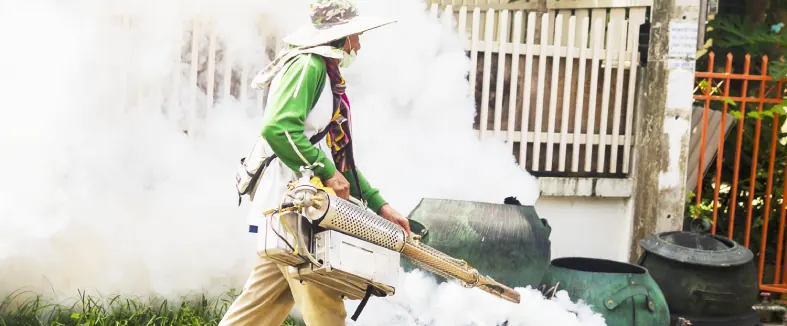
- Fogging knocks down flying adults quickly. It is useful during outbreaks, but on its own it gives only short relief, because new mosquitoes keep emerging from breeding sites.
For housing societies, schools and offices
In apartment complexes, a few neglected spots, such as a basement sump, a terrace water tank or an unused cooler, can produce mosquitoes for the whole building. Societies get the best results with a monthly plan from June to November that combines a site survey, larvicide, residual spray and fogging of common areas, along with reminders to residents about the weekly dry day.
Protect your family
- Use mesh on windows and doors, and mosquito nets for children and the elderly.
- Wear full-sleeved clothes in the early morning and evening.
- Use a repellent as directed on the label.
- If anyone has a high fever, body ache or rash, consult a doctor promptly and avoid self-medication.
If mosquitoes keep coming back despite these steps, a professional survey can usually find the breeding source quickly.